
This article explains how to easily repair your foam surfboard (softboard) at home without expensive professional materials.

If you’ve been following my blog for a while, you already know: I love my little foam fish. It’s my go-to board when the line-up gets super crowded or when the waves are small, messy and weak. Thanks to the extra volume and soft material, sessions on this board are usually stress-free and fun.
But even a board that seems almost indestructible compared to PU can take some serious damage. Foam surfboards suffer, for example, when you ride over fins or sharp rocks or, like in my case, when the transport wasn’t properly padded. And honestly, the most annoying type of surf damage is probably a ding from transport.
With hardboards made from PU (polyester) or epoxy, the repair method is clear: you use resin. But that left me with one big question: How do you actually repair a foam surfboard?
In this beginner-friendly DIY guide, I’ll show you step by step how to repair your foam surfboard quickly, cheaply, and reliably and which common mistakes you should absolutely avoid.
Affiliate Disclosure: Some of the links in this post are affiliate links. This means I may earn a small commission if you purchase through them, at no extra cost to you. You can find more information in the Disclaimer.
Recommend Read: Why a Foam Surfboard is Unbeatable for Beginners – and Why Even Pros Love Them!
My Biggest Mistake When Repairing a Foam Surfboard
Before we get into it, here’s an important note:
It’s always best to get your surfboards repaired professionally if you want them to last and that includes foam surfboards. Repair shops use the right materials, proper curing methods and clean finishing techniques that prevent the damage from spreading.
However… if you’re only dealing with a small ding, you’re currently traveling on a budget or you simply want to learn how to fix it yourself, you can absolutely give it a try. With the right method, DIY repairs can hold up surprisingly well and buy you time until you find a professional.
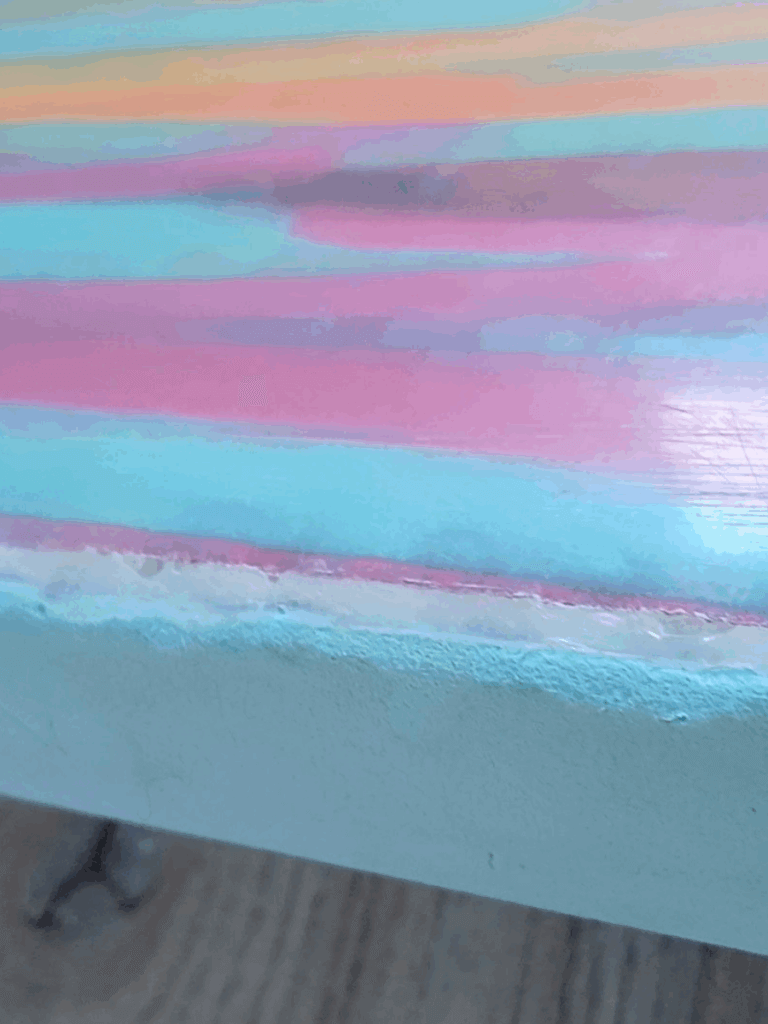
Here’s what the damage on my board looked like:
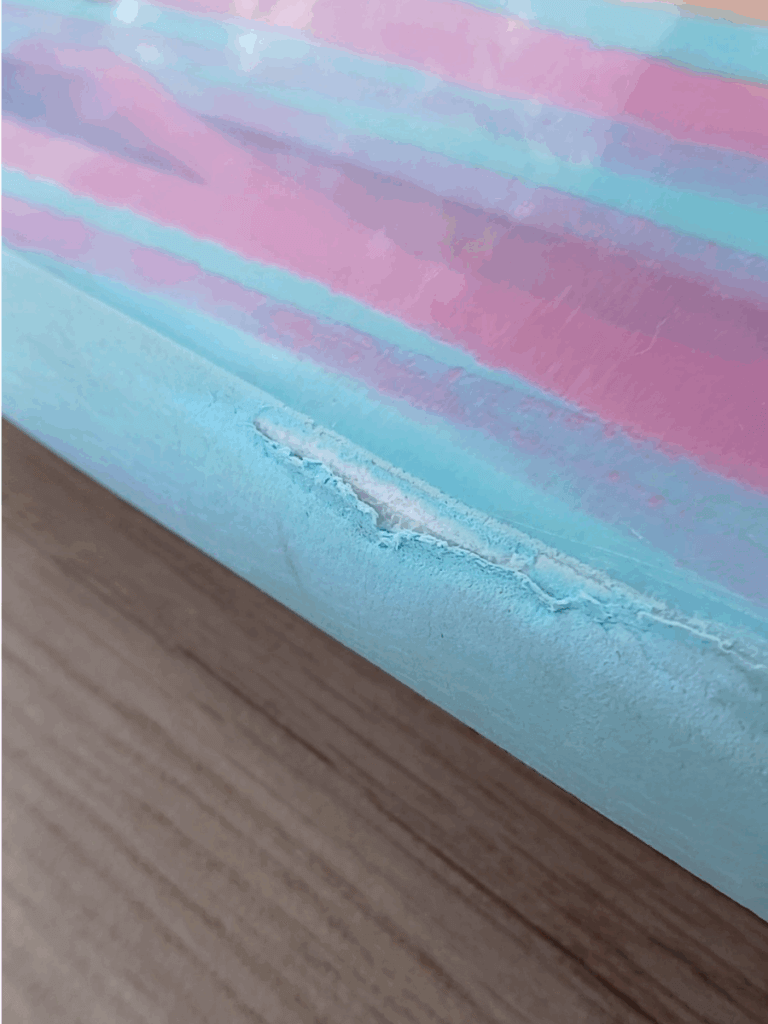
I walked into a surf shop here in Costa Rica and got the recommendation to simply use epoxy resin to fix the ding. A specific softboard repair kit (which I later found online) wasn’t available there. Honestly, epoxy sounded questionable to me from the beginning. That stuff gets extremely hard and doesn’t match the flexible feel of a soft-top at all.
But I figured the guy knew more than I did, so I gave it a try anyway. And let’s just say… it was a complete disaster. (See photos.)
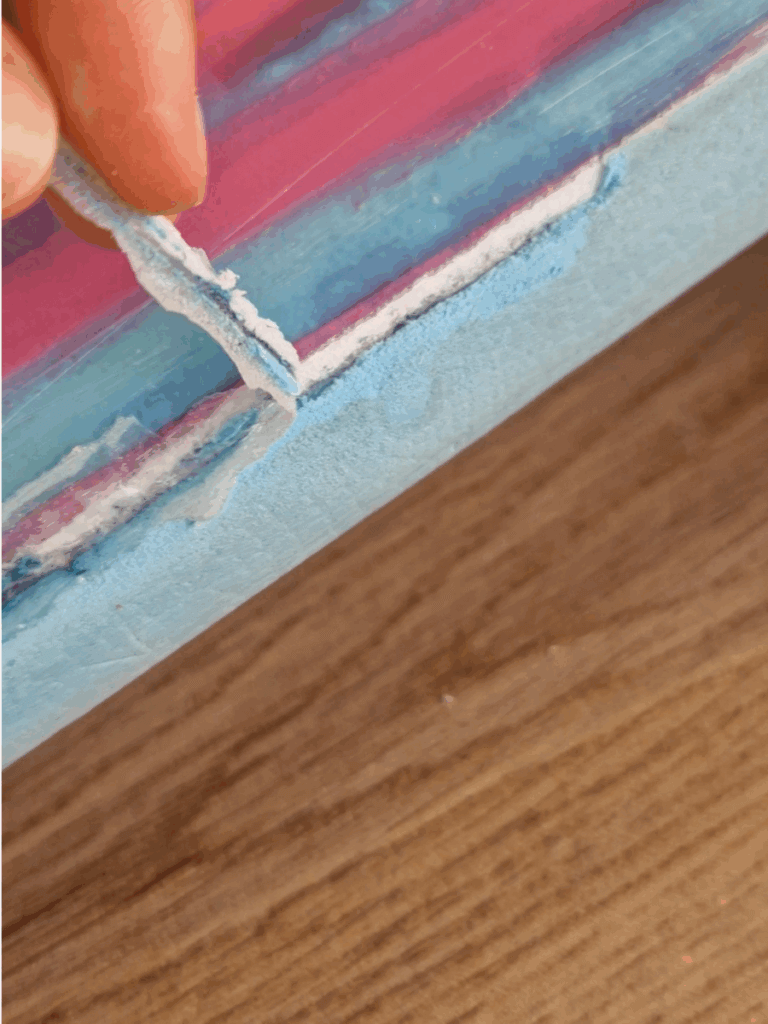
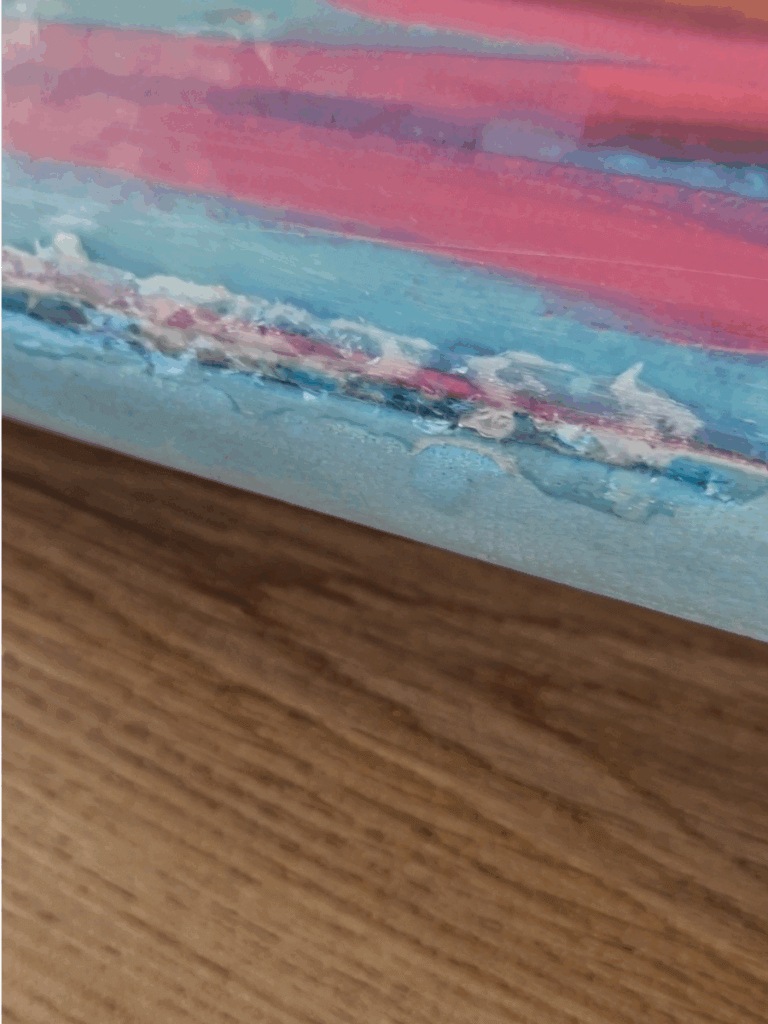
The epoxy did stick at first, but it was way too hard and peeled off again with the slightest bend. And the worst part was that the damage actually got even worse!
Do not try this, at least not on areas where the foam is exposed.
I was honestly super frustrated. But hey… that’s part of the surf journey, right?
So I did some research, browsed forums and YouTube videos and finally found a method that made sense: Hot glue.
I’ve used hot glue to fix shoes before and knew it’s much more flexible than resin and distributes pressure better. So I gave it a shot and to spoil the ending: It worked incredibly well!
With a bit of patience, the right tools, and almost no cost, you can repair your soft-top surfboard in just a few minutes.
What You’ll Need to Repair Your Softboard (Material Checklist)
The great thing is, you don’t need any expensive professional products, not even a surf shop nearby. For small dings, most of the necessary tools are things you probably already have at home.
Materials
- Hot glue gun with clear glue sticks
- Masking tape
- Small utility knife or scalpel
- Paper towels / lint-free cloth


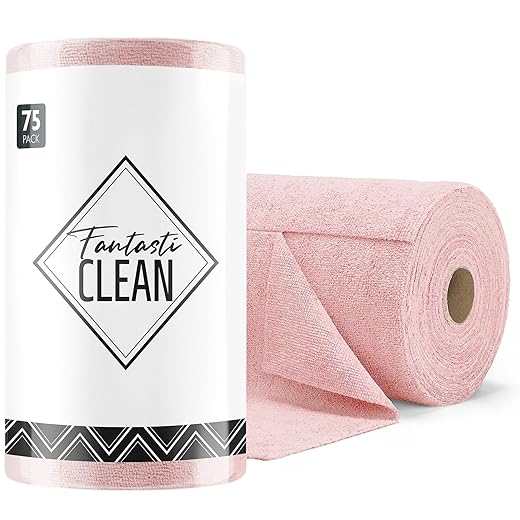
Optional:
- Waterproof paint pen (for cosmetic touch-ups)
- Fine sandpaper
Tip: If you’re traveling, you can find hot glue almost anywhere — hardware stores, supermarkets or even souvenir shops. Even here in Costa Rica I was able to buy some easily.
What to Do If the Damage Isn’t in the Foam, but on the Hard Outer Shell
Most foam surfboards have a harder, more durable shell on the bottom (and sometimes along parts of the rails). If you get a crack or hole in this area, the repair process is slightly different.
In this case, you should first seal any exposed foam with hot glue. This prevents water from getting inside the board and keeps the structure stable. Once the glue has completely hardened, you can add a thin layer of epoxy resin on top. This creates a smooth, hard surface again and stops the material from peeling further.
Important:
Never apply epoxy directly onto exposed foam. It soaks in, becomes brittle, and can actually make the damage worse.
By combining flexible material on the inside and a hard seal on the outside, the repair behaves much closer to the original build of a softboard — and holds up much longer in the water.
Step-by-Step Guide: How to Repair Foam Surfboard
1. Clean & dry the area
Wipe the damaged zone thoroughly and remove salt, sand, and dust. If any water might have seeped in, let the board dry completely first—ideally in direct sun or a warm, airy spot.
Why it matters: Moisture under the glue = mold, poor adhesion, and material fatigue.
2. Trim loose edges
Carefully cut away any loose EVA foam around the ding. The smoother the edge, the better your glue bond and final finish.
3. Mask the repair zone with tape
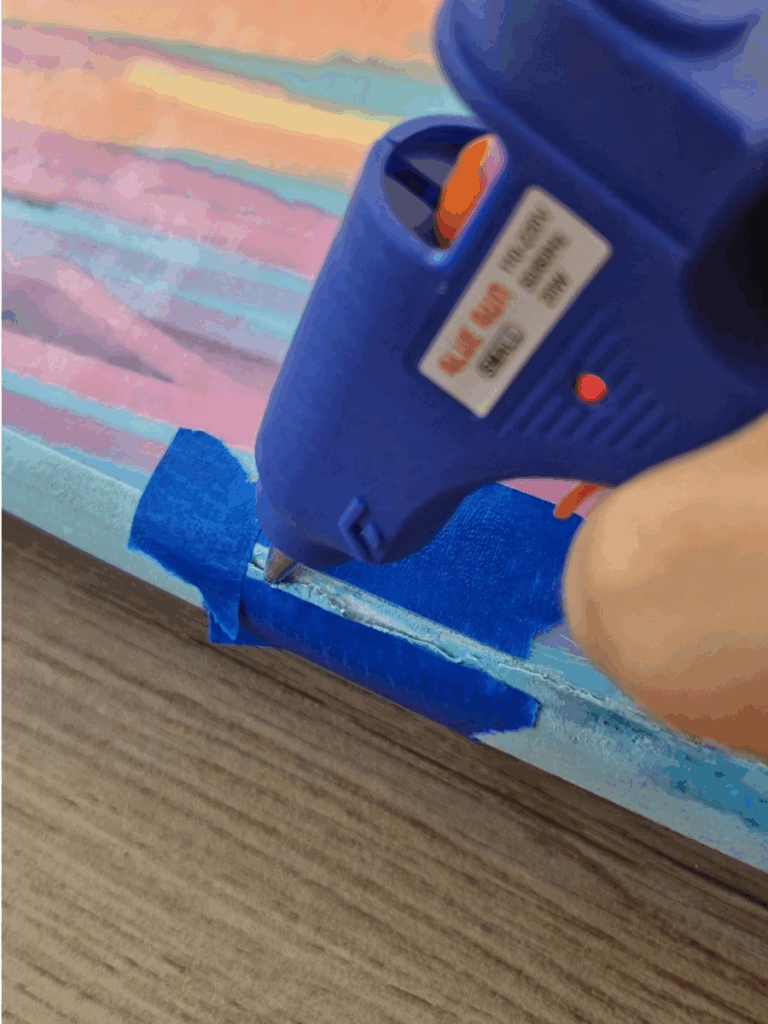
Lay the board flat with the ding facing up, stable and under no tension. Use painter’s (masking) tape to frame the damaged area so the hot glue forms a clean, sharp edge (just like taping before painting a wall 😉).
Important:
If the damaged area is larger, work in small sections. Otherwise the hot glue sets too fast and the repair can turn lumpy or uneven.
4. Apply hot glue
Apply a thin layer of hot glue directly onto the exposed area.
Important:
Don’t apply it too thick, otherwise the glue may crack later. It’s better to work in 2–3 smaller layers until the surface reaches the correct level.
5. Smooth the surface
Some YouTube tutorials suggest smoothing the glue while still liquid using a wet finger (or even an ice cube). While this can work, I found an even better method in a surfboard repair forum:
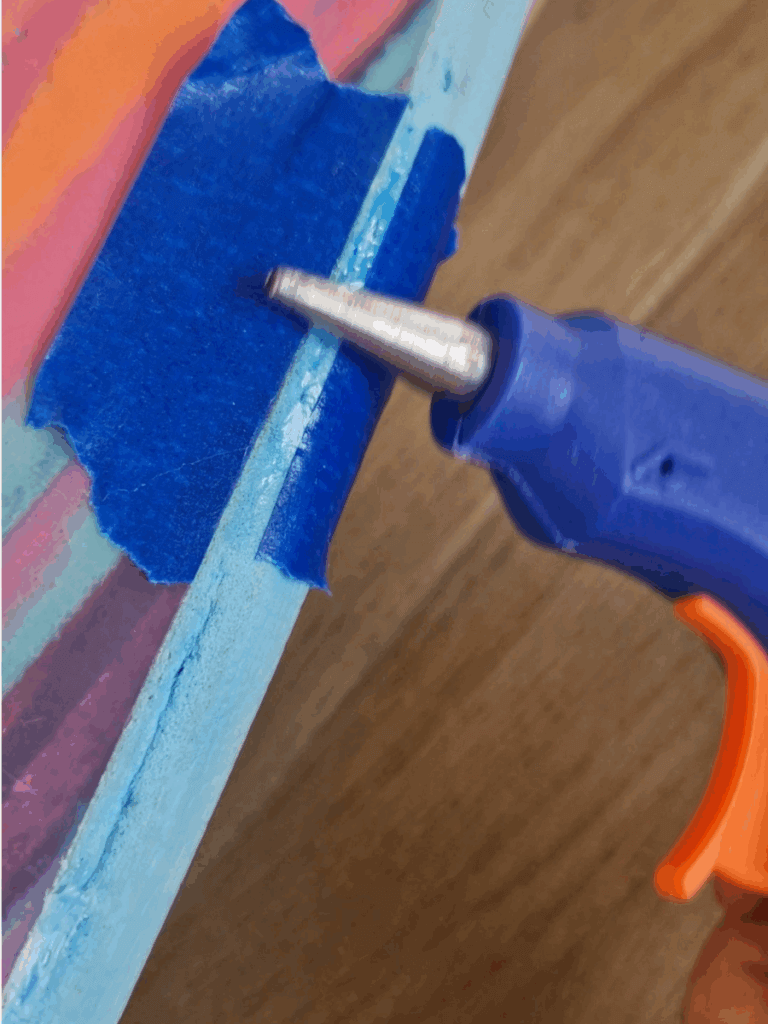
Let the glue partially dry for a few seconds, then gently smooth it out using the side edges of the hot glue gun. This creates a much flatter, cleaner finish—without burning your fingers.
Important:
Don’t press too hard. Use soft, controlled pressure so you don’t push the glue out of the repair zone.
6. Let it cure
Wait at least 30–40 minutes. No pressure, no sun exposure during this time.
7. Optional: Light sanding or trimming
Depending on how clean the result turned out, you can gently round off the edges with fine sandpaper or trim any excess with a utility knife.
If needed, you can also do a quick touch-up using the side of the hot glue gun again.
How long does it last?
Surprisingly well, as long as you’re not grinding it over sharp rocks or throwing your board around without any padding. For small transport dings, pressure marks or tiny cuts it’s absolutely sufficient.
I kept surfing with it afterwards without any issues — no reopening, no water inside, no problem so far.
What you shouldn’t do!
❌ No PU or epoxy resin on soft-top foam
It becomes too hard, cracks when flexing, and can even make the damage worse.
❌Avoid aggressive glues
…like super glue. They chemically damage the foam.
❌ No silicone
It doesn’t bond well on flexible surfaces and collects dirt quickly.
❌ Don’t rush the repair 10 min before your session
Proper drying and curing time is key for the fix to hold.
When should you go to a professional?
If time and money aren’t an issue, going to a pro is always the safest option. But definitely head to a surf shop if you have any of the following:
- Deep rail damage
- Water inside the core
- Delaminated areas
- Cuts longer than 3–4 cm
- The board bends or creases when you press on it
Recommend Read: What Surfboard Size Should I Get? A Beginner’s Guide to Finding Your First Board
Final Thoughts
Softboards are forgiving, but not indestructible. Small dings happen faster than you think — during transport, leaning the board against a wall, or simply in the parking lot. The good news: with a hot glue gun and a few minutes of time, you can easily fix minor damage yourself without a repair kit or any pro tools.
For shallow cuts and surface cracks, this method is quick, affordable, and surprisingly reliable. It keeps your board watertight so you can keep surfing without stress.
For deeper damage, water inside the core, bigger cracks, or if you’re simply unsure: better let a pro handle it. Your board will thank you in the long run. 😉
In this guide, you learned how to repair a foam surfboard yourself and which mistakes to avoid so the fix actually lasts.