
This article takes a close look at Lufthansa vs. Air France in Economy Class. Which airline really delivers more on long-haul flights?
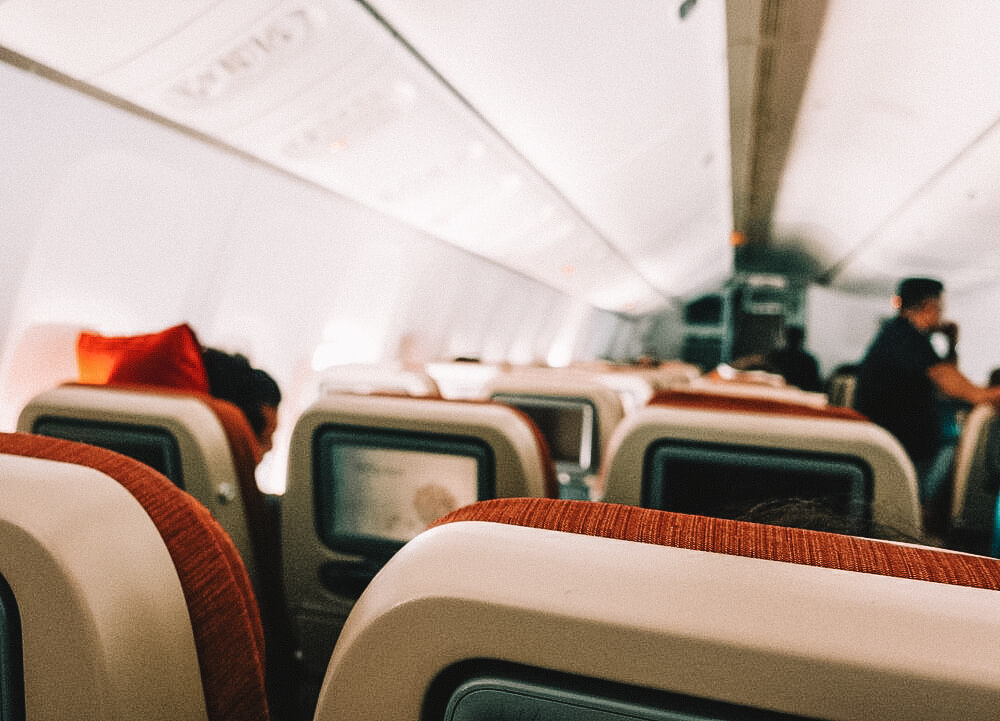
Since moving to Costa Rica, taking the long flight back to Berlin has become a regular part of my life. Most of my family still lives there and many things like doctor’s appointments or official paperwork can only be taken care of in person.
That’s why choosing an airline has long been more than a quick price comparison for me. It’s about comfort on flights of more than eleven hours, about reliability and about a frequent flyer program that truly pays off in the long run. Anyone who regularly travels between Europe, Central America or other long-haul destinations knows: the right airline doesn’t just save you stress, it also saves you money over time.
So which airline really offers the better overall package? How comfortable are the seats? And which frequent flyer program gets you faster to free flights or upgrades?
In this article, I’ll compare Lufthansa vs Air France in Economy Class honestly and independently — from the perspective of a frequent flyer who values comfort and smart benefits.
Why Choosing the Right Airline Matters for Me in the Long Run
Ever since we moved from Berlin to Costa Rica, long-haul flights have become part of my everyday life. At least once or twice a year I fly back to Germany for family visits, doctor’s appointments, business matters, or simply to spend time with friends and enjoy a piece of home.
That’s why my perspective on flying has completely changed. It’s no longer just about finding the cheapest ticket. What I really care about now is flying with an airline I can rely on, one where I know what to expect. I want to travel comfortably, stress-free and as efficiently as possible. When you spend ten to thirteen hours in economy on a regular basis, you quickly realize how much even small differences can shape the whole experience.
One of the biggest factors for me is the frequent flyer program. If you fly often, you can collect miles with every trip and really benefit in the long run – whether through free flights, upgrades, or perks like extra baggage and lounge access at the airport.
That’s why I’ve taken a close look at the two main options available for my route between Europe and Costa Rica: Lufthansa with its Miles & More program, and Air France with Flying Blue. The question is: which airline offers the better overall package for economy travelers on long-haul flights, and which one truly pays off over time?
Flight Network & Connections to Costa Rica
If you travel regularly between two continents, you know how important reliable flight connections are. It’s not just about keeping the overall travel time short, it’s also about avoiding stressful layovers, long waiting times or inconvenient connections.
Lufthansa: Direct from Germany to San José
Lufthansa operates several direct flights per week from Frankfurt to San José. For travelers starting in Frankfurt, this is convenient because you save a layover and get to your destination faster. For me personally, it doesn’t make much difference since I fly out of Berlin and need a feeder flight anyway. The direct route is also more common during the European winter season.
Air France: Via Paris to San José
Air France flies daily from Paris (CDG) to San José. Getting to Paris usually involves a feeder flight from German cities like Berlin, Hamburg, Munich or Frankfurt. The layover in Paris can be a bit stressful depending on the connection, especially at the large and sometimes confusing Charles de Gaulle Airport. On the other hand, Air France scores with daily availability, often cheaper fares and more flexible flight times.
Seats, Legroom & Comfort – How Comfortable Is Economy?
Spending eleven to thirteen hours in economy can either feel endless or actually be manageable and a lot depends on the basics, like having a seat that works for you.
Lufthansa: Solid, but with limits
With Lufthansa, the seat pitch is around 79 cm and the width about 43 cm – pretty standard. It’s fine, but honestly, a bit more space would be nice, even for me at 1.69 m. The padding is okay and features like the headrest, neck support and backrest do their job. What stood out to me, though, is that the seats only recline slightly, which makes it harder to sleep. I usually only recline if the person behind me does too, but still, it’s good to at least have the option.
One big plus: on my Costa Rica flights with Lufthansa, they used aircraft where the window rows had only two seats. For me and Angel, that’s perfect: he likes the aisle, I like the window and no one gets stuck in the middle.
Air France: A bit more comfort
Air France gives you a touch more room: up to 81 cm of pitch and up to 46 cm of width, especially on newer planes like the A350 or Dreamliner. The cabins feel brighter and more modern too, which makes the whole atmosphere nicer. The recline is also better, which really helps on overnight flights.
The downside: most economy rows are three across. If you’re traveling as a couple, you either give up the middle seat or pay extra for one of the two-seat rows – and the surcharge can be steep.
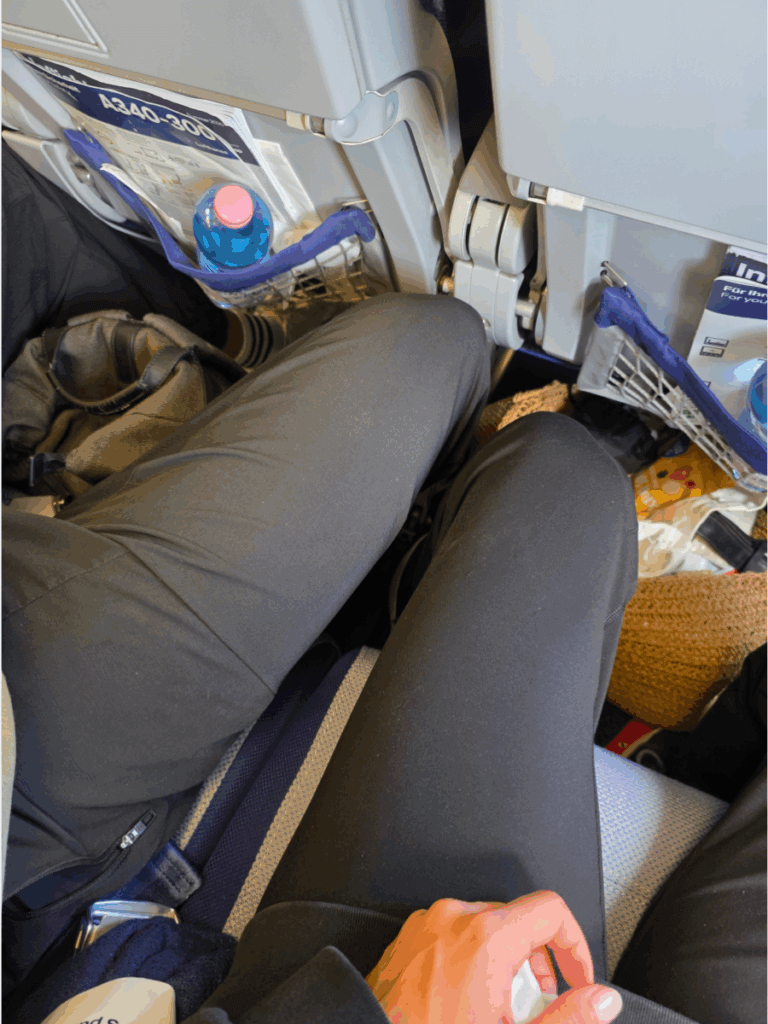 Lufthansa
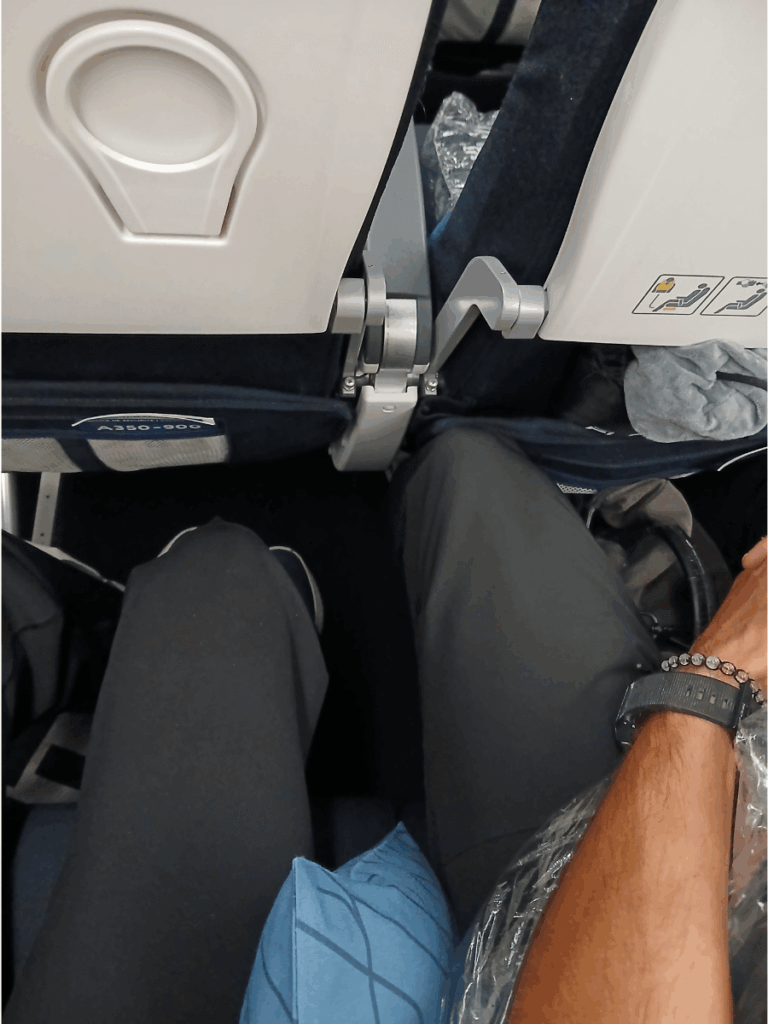 Air France
My takeaway
When it comes to pure comfort, Air France is slightly ahead thanks to the newer cabins and a bit more space. Lufthansa, on the other hand, wins with its two-seat rows, which is a big plus for couples. For us, that setup often tips the scales, because being comfortable together makes a long flight much easier.
Food & Drinks in Economy
On a long-haul flight, meals and drinks are more than just a distraction. They can really shape how comfortable and pleasant the whole journey feels.
Lufthansa: solid and reliable
With Lufthansa you usually get two hot meals, one shortly after take-off and another before landing, plus some snacks in between. The dishes are international, sometimes with a little German touch. Everything tastes fine, though rarely memorable. On one of my last flights I had pasta twice, simply because I passed on the meatballs option.
The drinks are classic: soft drinks, coffee, tea, beer, and wine are included. Spirits are available if you ask, often without extra cost. One thing I really liked: the crew regularly came through the cabin with water, so you don’t always have to get up or press the call button just to stay hydrated.
Air France: More flair and little extras
With Air France you can feel the French touch in the meals- Often there’s a cheese selection or desserts that feel more like a pâtisserie treat. It’s just a bit more refined. The wine on board was much better than what you usually get in economy and yes, there was even Champagne, which felt like a small highlight.
A downside: if you want something to drink between meal services, you usually have to walk to the galley. That can be inconvenient, especially if you’re stuck at the window.
Vegetarian and vegan options
I don’t eat much meat and usually avoid it when flying, so I tried the vegetarian options on both airlines. In practice, this usually meant getting the vegan meal. At Air France, I found it disappointing to miss out on the cheese and to be served margarine instead of butter. That’s just not my thing, so on later flights I went back to the standard menu.
My partner Angel, who is allergic to certain animal proteins, always orders the vegan option anyway. For him, the vegan meals with Lufthansa were much tastier and better balanced.
My takeaway
Lufthansa keeps things classic, simple, and dependable. Air France adds more flair, with meals that feel a bit more thoughtful, especially if you appreciate wine. For vegetarians or vegans, it’s really down to taste. For us, Lufthansa worked out better in that case, but food is always a matter of personal preference.
Service & Friendliness of the Crew
On long-haul flights, the crew can make all the difference. A warm smile, a bit of small talk or simply feeling looked after can make the hours in the air a lot more pleasant.
Lufthansa: Professional and reliable
With Lufthansa I’ve usually found the service very structured and organized. Everything runs smoothly, but the crew still manages to stay friendly. Most flight attendants were attentive, helpful and sometimes even shared a lighthearted joke. Their English was always excellent, so you don’t need to worry if you don’t speak German. If you value a calm, reliable experience, Lufthansa does this very well.
One moment I’ll never forget: I once flew the day after my birthday. A kind crew member came over, wished me a belated happy birthday and surprised me with a small gift: chocolates, a coffee mug and a card signed by the whole team. He then quietly asked if I’d like a bottle of wine or Champagne. A few minutes later he came back, to my surprise, with a big bottle of Champagne instead of a small one. I couldn’t open it on board, of course, but it was such a thoughtful gesture and I loved taking it home to enjoy later. Little touches like that really leave an impression.
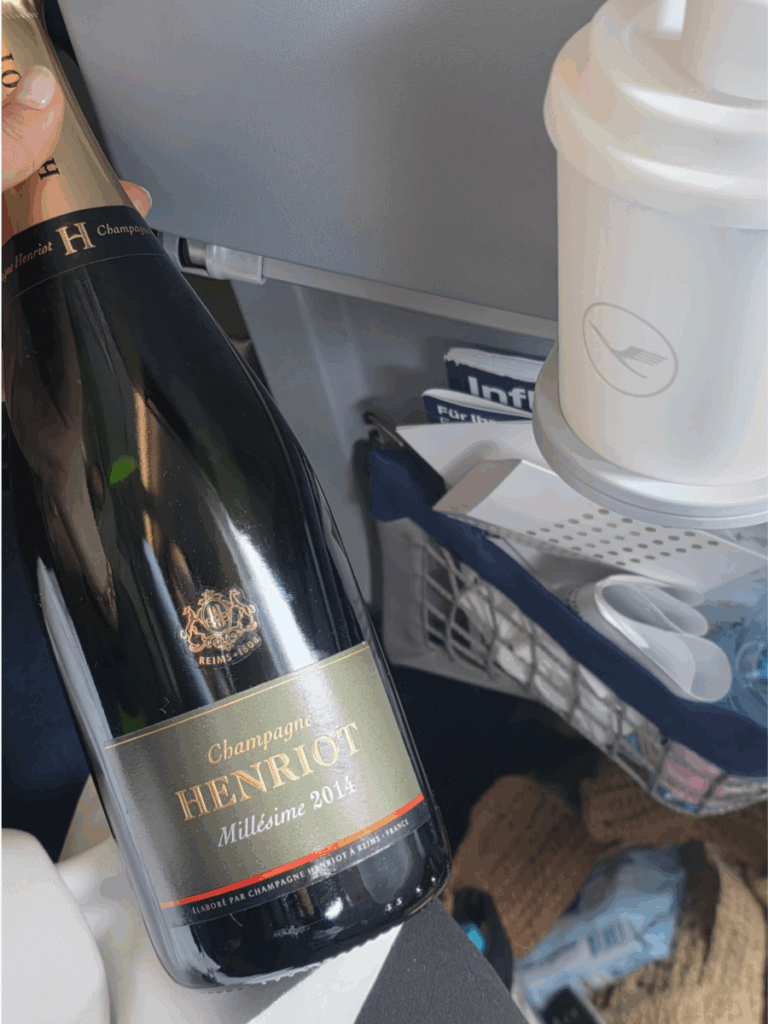
Air France: Warm, but not always consistent
On Air France, the tone can be just as warm, sometimes even more personal. But I also noticed that it depends heavily on the crew. Some flights felt welcoming and lighthearted, while others left me with the impression that staff were easily annoyed when asked for something. Another point: not all crew members spoke strong English, which occasionally made communication tricky.
My takeaway
For me, Lufthansa comes out ahead in this category. Their service has been consistently professional and friendly and I always felt well cared for. With Air France you can definitely get a lovely, warm crew, but it’s a bit more of a gamble compared to Lufthansa’s reliability.
Entertainment & Onboard Amenities
On long-haul flights, the entertainment system often becomes your best friend. A good movie or series can make the hours pass a lot more pleasantly.
Lufthansa: okay, but a bit outdated
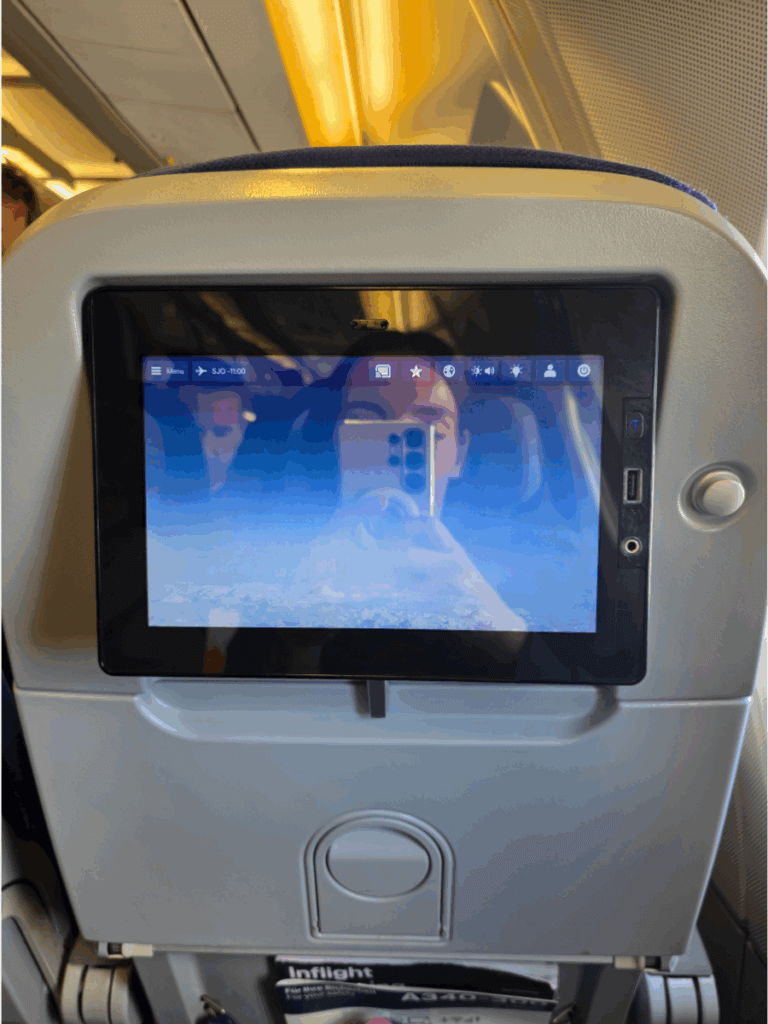
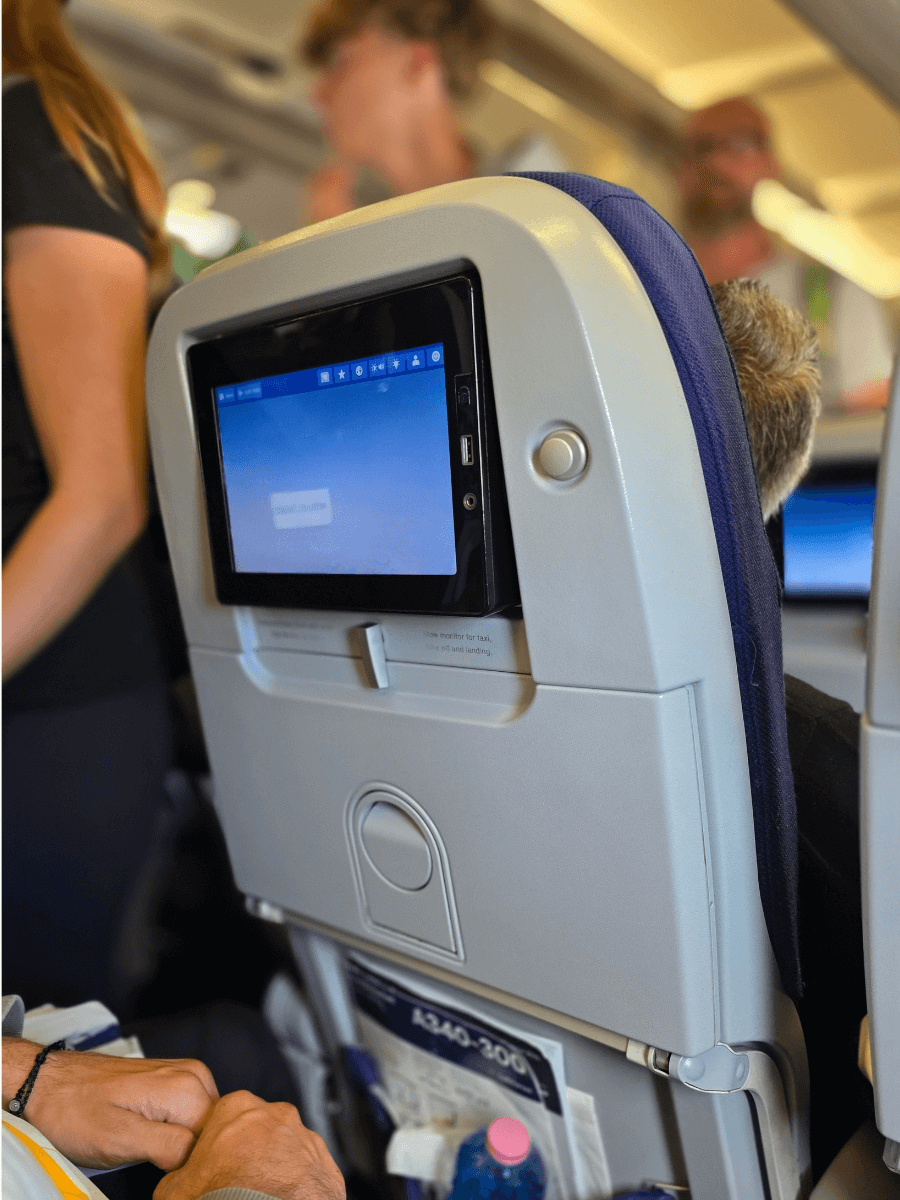
Lufthansa offers the classic inflight entertainment setup with movies, TV shows, music, and games. The selection is usually broad enough to keep you entertained for the duration of the flight, but the screens themselves sometimes feel a little old-fashioned in terms of design and resolution.
Air France: More modern and slightly more varied
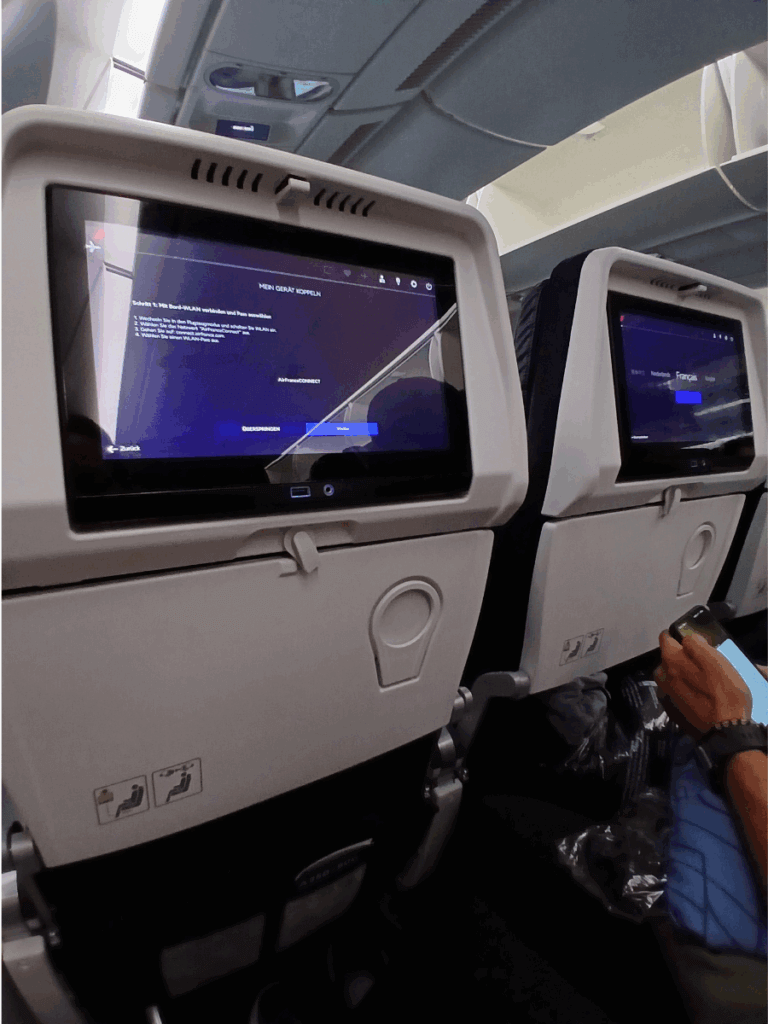
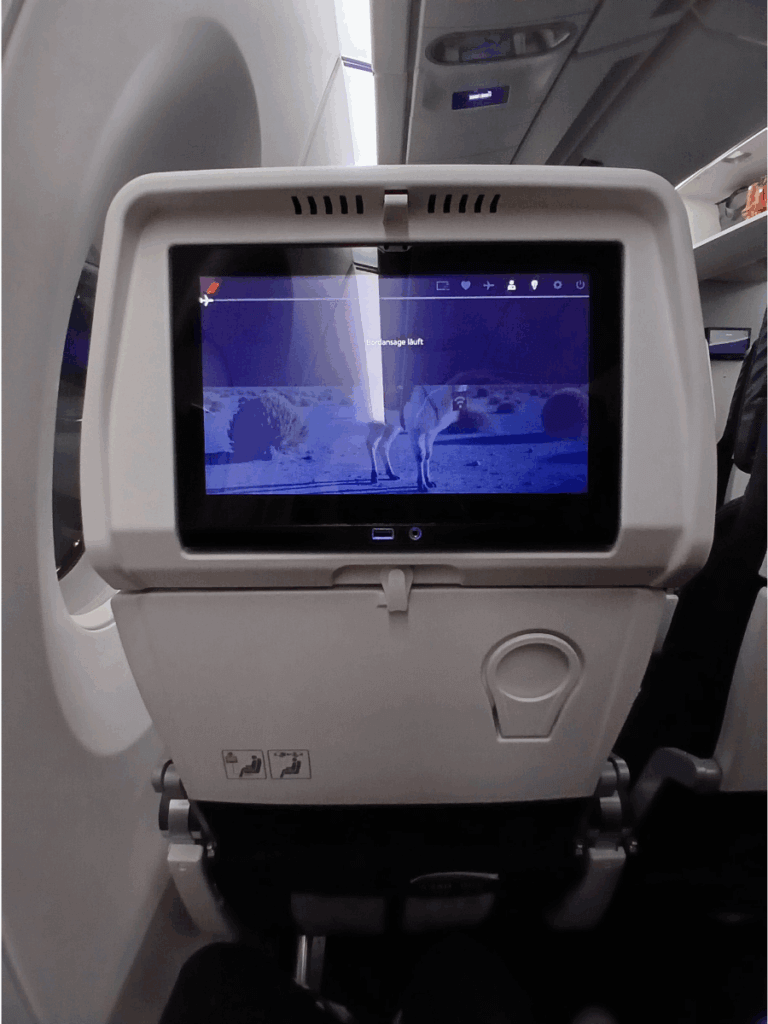
Air France has already equipped many of its newer aircraft with larger, more modern screens. The interface feels smoother and easier to use and the overall design looks fresher. I also felt the movie and TV selection was a little more up-to-date, with more well-known titles available compared to Lufthansa. Another plus is that you could use your smartphone as a remote.
Frequent Flyer Programs – Which One Really Pays Off?
If you fly regularly, a good frequent flyer program can make a huge difference. It’s not just about the flights themselves, but about what you get back in the long run, whether that’s free flights, upgrades or perks like lounge access. Here we’ll look at Miles & More vs. Flying Blue for long-haul travel.
Lufthansa – Miles & More
With Lufthansa, miles are distance-based. That means you earn a percentage of the actual flight miles depending on your booking class. Cheap economy tickets often give you only a fraction, while higher classes like Y or M give you the full mileage. For frequent flyers within Europe, this can be useful because the Star Alliance network has so many partners from flights to hotels, rental cars and even credit cards.
On long-haul flights, like Europe to Costa Rica, the downside becomes clear. A return ticket can easily require 60,000–80,000 miles plus taxes and fees. So you need to fly a lot before you really benefit.
Air France – Flying Blue
Flying Blue works differently. Miles (or rather “points”) are based on the ticket price, not the distance. If you buy a very cheap economy ticket, you’ll earn fewer points. But when it comes to redeeming them, Flying Blue often gives you better value. Thanks to monthly Promo Rewards, you can sometimes book a Europe–Costa Rica return for as little as 30,000–35,000 miles. That’s nearly half of what Lufthansa would require. For long-haul flights, Flying Blue can often deliver a much stronger return – as long as you’re flexible with dates.
So which program is better for long-haul?
- If you fly mostly within Europe and rely on many short-haul connections, Miles & More is still a strong choice because of its extensive partner network.
- But if your focus is on long-haul trips like Costa Rica, Flying Blue generally offers better value, since you can redeem points far more efficiently.
Flight Prices – Who Offers the Better Deal?
After countless price checks, I’ve noticed that Lufthansa and Air France don’t differ much on long-haul routes to Central America or other destinations. The real variations usually come down to travel dates and seasonal offers.
- Lufthansa: If I didn’t have to add the extra leg to Frankfurt, Lufthansa would often give me the better deal. True bargains usually pop up in the off-season or when the airline tries to fill seats at short notice.
- Air France: With its daily schedule from Paris, Air France gives you more flexibility and often a higher chance of snagging a cheaper ticket. But don’t forget to factor in the additional connection to Paris, which can add both time and cost.
The Bottom Line is, that It really depends on where you’re starting from. The safest strategy is to compare both airlines regularly and keep an eye out for special promotions. For frequent flyers, the long-term value usually comes less from the ticket price itself and more from the frequent flyer program, while occasional travelers might simply chase the cheapest fare available at the time.
Taking Your Surfboard – Which Airline Works Better?
For surfers, the ticket price is only part of the equation. The real question is: how much does it cost to bring your board along?
Lufthansa:
At Lufthansa, surfboards count as special sports equipment and need to be registered at least 72 hours before departure. In some cases, you can check in your surfboard instead of a regular piece of luggage without extra fees, but that doesn’t apply to the “Economy Light” fare.
Here’s the rule of thumb:
- Boards are split into short (up to 200 cm) and long (200–315 cm).
- As long as your bag stays under 32 kg, you can fit multiple boards inside.
- If your gear exceeds your free baggage allowance, you’ll pay a flat sports equipment fee, usually between €100 and €200 per flight segment.
Tip: Use Lufthansa’s baggage calculator to check the exact cost and clarify with customer service if you’re unsure. I once had a nasty surprise at another airline’s counter, so I personally prefer to confirm ahead of time.
Air France:
With Air France, boards over 107 cm (which means basically every surfboard) must be registered as sports equipment no later than 48 hours before departure. In practice, I’d suggest registering as early as possible since cargo space can be limited.
On long-haul flights, the fees usually range from €75 to €150 per segment, so sometimes cheaper than Lufthansa. Boards can be up to 300 cm long, although the airline does note exceptions on some aircraft (down to 180 cm) – though I’ve never personally had an issue. Always Check the Website before your trip!
Like with Lufthansa, you can pack multiple boards in one bag as long as it stays under the weight limit and in many cases it can replace your standard luggage allowance.
My tip for surfers
Always add the board fees straight into the ticket price when comparing airlines. A “cheap” flight can turn expensive if the sports baggage costs stack up. Sometimes it’s worth traveling light and taking only a board bag (up to 32 kg), skipping the suitcase. And in some cases, it may even be smarter to rent or buy a board locally and sell it before you leave, especially in a country like Australia or Costa Rica where used boards are easy to find.
Conclusion: Lufthansa vs. Air France in Economy
Comfort |
Air France wins here with slightly more spacious and modern seats. |
|
Food & Drinks |
This one depends on your taste. Personally, I enjoyed Air France more, but if you’re vegetarian or vegan, Lufthansa might be the safer choice. |
|
Service |
For me, Lufthansa clearly comes out on top. The crew has been consistently professional, friendly, and reliable. |
|
Entertainment |
Both airlines offer solid options, but Air France feels a bit more modern in terms of screens and layout. |
|
Frequent Flyer Program |
If you don’t fly a lot within Europe, Flying Blue from Air France usually gives you better value on long-haul redemptions. Miles & More, however, can be stronger if you have many European connections. |
|
Surfboard Policy |
Quite similar between both airlines – check the fees ahead of time and always register your board early. |
|
Flight Prices |
Also pretty even. Keep an eye out for deals and seasonal promotions, as that can make all the difference. |
My final tip: Don’t just look at the ticket price. Think about how you actually travel and what matters to you in the long run, whether that’s comfort, smooth service or maximizing your miles. That’s what really makes the difference and saves you more over time than any one-off “cheap” ticket.
This article compared Lufthansa vs Air France in Economy Class to help you figure out which airline might be the better choice for long-haul flights – even if you’re traveling with a surfboard.