In this article, you’ll find out the 5 most important reasons why a longboard isn’t the best choice for beginner surfers.

You’re ready to dive into the world of surfing and wondering which board to start with?
You’ve probably heard that longboards make it super easy to catch waves and are more forgiving – so, perfect for beginners? Not quite!
At first glance, it might seem like: the bigger the board, the better it is for learning. After all, longboards offer maximum float and allow you to catch even the smallest waves with minimal paddling effort. But that doesn’t automatically make a board beginner-friendly.
Why it honestly makes me cringe every time I see a surf newbie learning on a longboard you’ll find out in this article.
What is a Longboard? – Basics
Before we dive into why a longboard isn’t always the best choice for beginner surfers, let’s first take a quick look at what exactly a longboard is and what defines it.
Origin
The longboard is the most classic surfboard shape and became popular in the 1950s and 60s, especially at iconic spots like Malibu, California. Back then, it was the board to ride and to this day, it remains a symbol of the roots of modern surf culture.
Longboard Anatomy
A typical longboard is characterized primarily by its length: it’s at least 9 feet long (about 2.75 meters). It also features a generous width (around 22 to 24 inches), a wide nose with lots of surface area, and a flat rocker. These elements give the board maximum volume and excellent glide.
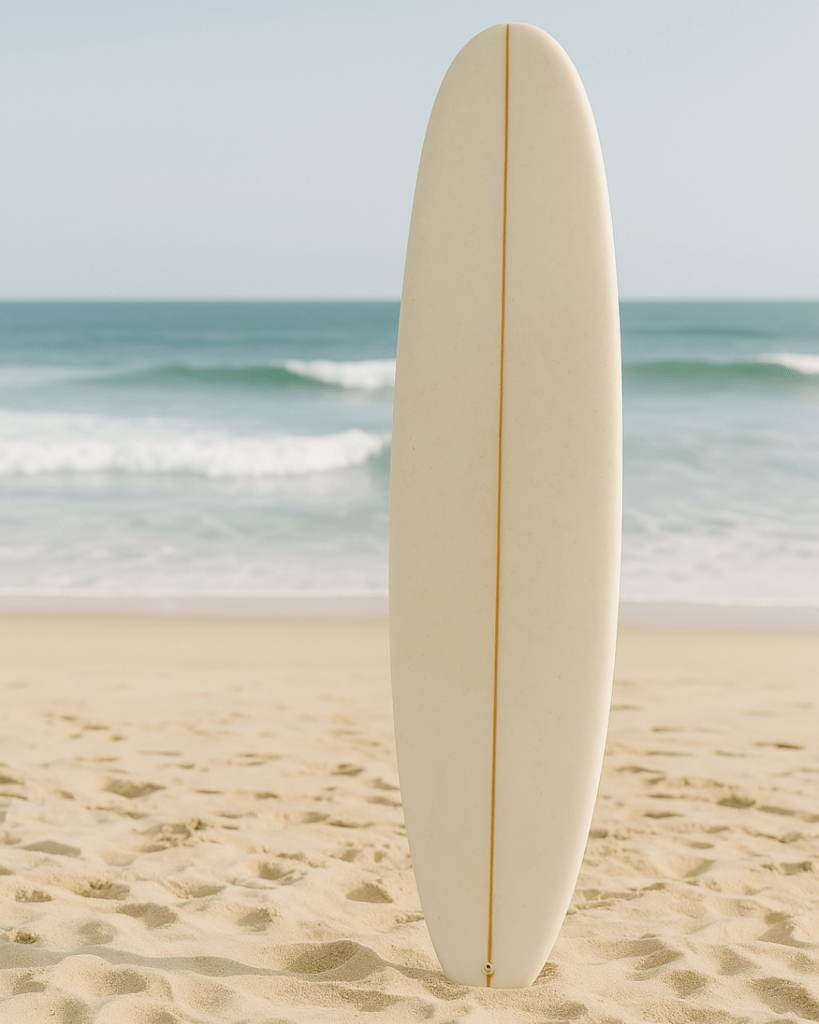

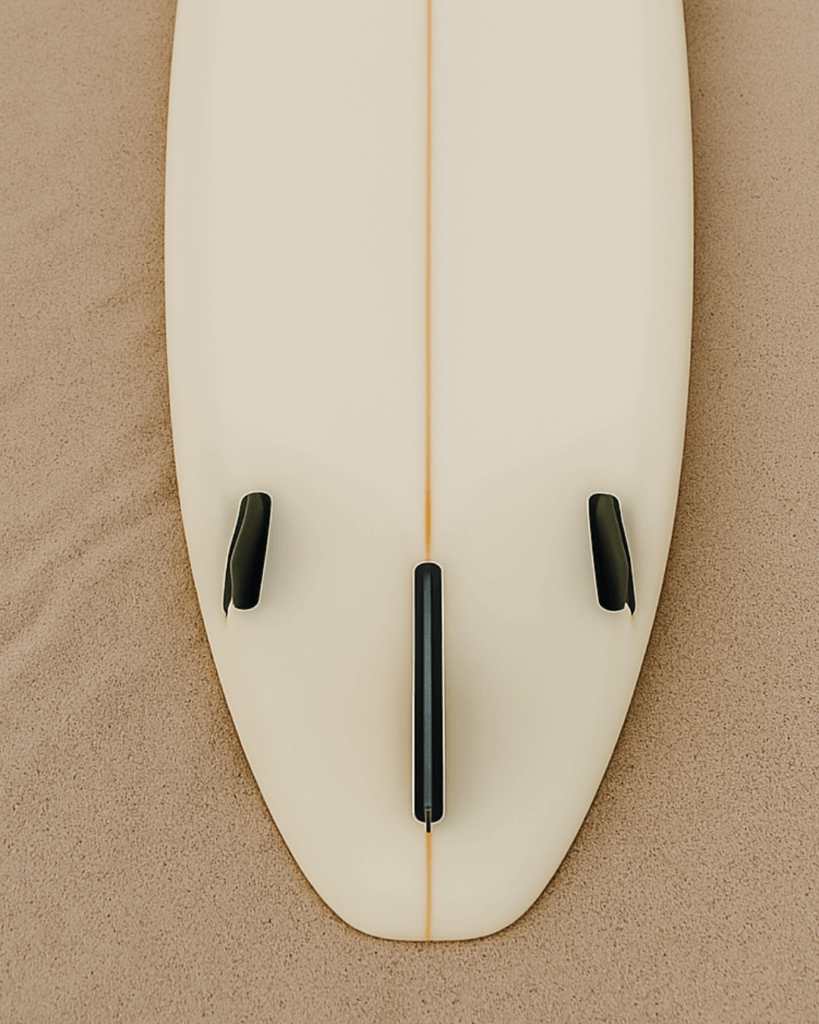
The tail is usually rounded or slightly pointed (pin or squash tail), and most longboards are surfed as single fins. Some models also come with a 2+1 fin setup – one large center fin combined with two smaller side fins for added stability and control.
Key Characteristics
The longboard’s shape and build give it the following performance traits:
- Excellent glide: Perfect for small, mellow waves. You can catch waves early and ride them for a long time – even when the wave has lost its power.
- High stability: The large surface area and volume make it easy to paddle and balance on.
- Low maneuverability: Less responsive than shorter boards – not made for sharp, radical turns.
- No duck diving: Due to its size, you can’t duck dive a longboard. You’ll need to use the turtle roll to get through whitewater.
- Not suitable for steep or powerful waves: Longboards struggle in large, fast-breaking conditions.
Surf Style
Unlike shorter boards that focus on quick turns, cutbacks, and powerful maneuvers, longboarding is all about flow, glide, and balance. A longboard represents a smooth and stylish way of surfing that celebrates rhythm and elegance rather than aggressive moves.
The longboard surf style is slower-paced, graceful, and flowing. It’s about reading the wave, moving with it, and expressing yourself with style and control.

Typical Longboard Maneuvers
- Cross-Stepping: You walk forward or backward on the board with a fluid, cross-legged step, often to position yourself perfectly for a noseride.
- Noseride: Balancing on the front of the board, ideally with both feet on the nose; this move is called a Hang Ten.
- Drop Knee Turn: A stylish turn where the back knee is dropped down for a smooth direction change – graceful and old-school.
- Trimming: Simply riding the wave in a clean, uninterrupted line without big maneuvers – just pure glide and balance.
If you enjoy visual learning, check out this video for a great summary of longboarding in action:
5 Reasons Why a Longboard Isn’t Ideal for Surf Beginners
Now that you understand how a longboard works and what makes it unique, it becomes clear why it’s not the most beginner-friendly option.
1. The Size Is Hard to Handle
Longboards usually measure 9 feet or more – while that offers great float and wave-catching ability, it also makes the board bulky and tough to control.
2. Duck Diving Isn’t an Option
As a beginner, you’ll likely start out in the whitewater – often standing in waist-deep water where you can still lift the board over foam waves. But once your instructor says, “You’re ready for the lineup!” – that’s when it gets serious.
3. The Most Dangerous Board in the Lineup
A 9-foot longboard combined with a 9-foot leash creates a danger zone of over 5 meters around you. That’s a lot of space in which you could accidentally injure yourself or others if you lose control. Longboards aren’t just long, they’re also heavy. And trust me, no one wants to get hit in the head by one.
Beginner surfers who don’t yet have solid board control pose a real risk to themselves and others in the water.
Anyone surfing a longboard must be able to perform a turtle roll safely and keep a firm grip on the board through breaking waves, especially in powerful whitewater. It’s not a board you can just casually try out without the proper skills.
4. Better Alternatives for Getting Started
There are much better options than a longboard when starting out – and at the top of the list is the Foam Surfboard.
Foam Surfboards are typically between 7 and 8 feet long, feature a soft foam top, and provide extra float and safety.
They’re:
Thanks to their smaller size and lighter weight, softboards are less dangerous and offer better control in the water.
If you’re ready to move up from a softboard, a Mini Malibu is a fantastic next step – it gives you more responsiveness while still being beginner-friendly.
5. Longboards Are More Expensive and Fragile
Another reason longboards aren’t ideal as a first board? They’re more expensive – both upfront and in long-term maintenance.
In your early surf days, it’s completely normal to have accidents:
Especially PU longboards are sensitive to pressure dings, cracks, and water damage, and repairs can quickly get pricey.
A single small mistake can turn into a costly repair and trust me, those little accidents happen a lot when you’re learning.

When a Longboard Can Make Sense for Beginners
A longboard can work for beginner surfers – if certain conditions are met. It might be a suitable option for you if:
- You’re already comfortable controlling your board and know how to move safely in the water
- You’re physically fit and have solid grip strength, with no fear of handling a longer board
- You plan to surf only small, mellow waves
- You’re surfing at a spot with plenty of space in the lineup (like a friendly point break)
- And you specifically want to learn the classic longboarding style with noserides, cross-stepping, and smooth trimming
Conclusion; Why a Longboard Isn’t (Yet) the Right Choice for Beginners
While longboards might seem stable and beginner-friendly at first glance, a closer look reveals that they’re too big, too heavy, and too technical for most entry-level surfers.
Yes, a longboard offers great glide and float, along with a stylish, relaxed surf style. But these exact features can make it unnecessarily difficult and even dangerous when you’re just starting out.
From tricky board handling and limited duck-diving options to an increased risk of injuring yourself or others, the five reasons outlined above clearly show why learning on a longboard can hold you back more than help you.
Instead, softboards and later in progress mini malibus give you the perfect mix of safety, float, control, and fun. Everything you need to catch more waves, build your skills, and progress confidently in the water.
Once you’ve gained more control, understand your surf style, and feel confident in any conditions, nothing’s stopping you from switching to a longboard and you’ll appreciate it even more when the time is right.
This article explored why a longboard might not be the best first surfboard for beginners.
If you found it helpful, be sure to check out our beginner-friendly guides on surfboard shapes, surf camps and wave reading!